
Books
Books & publications.
Featured work by Ronald T. Sambona — confronting the realities of Zimbabwe's education system and reimagining its future.
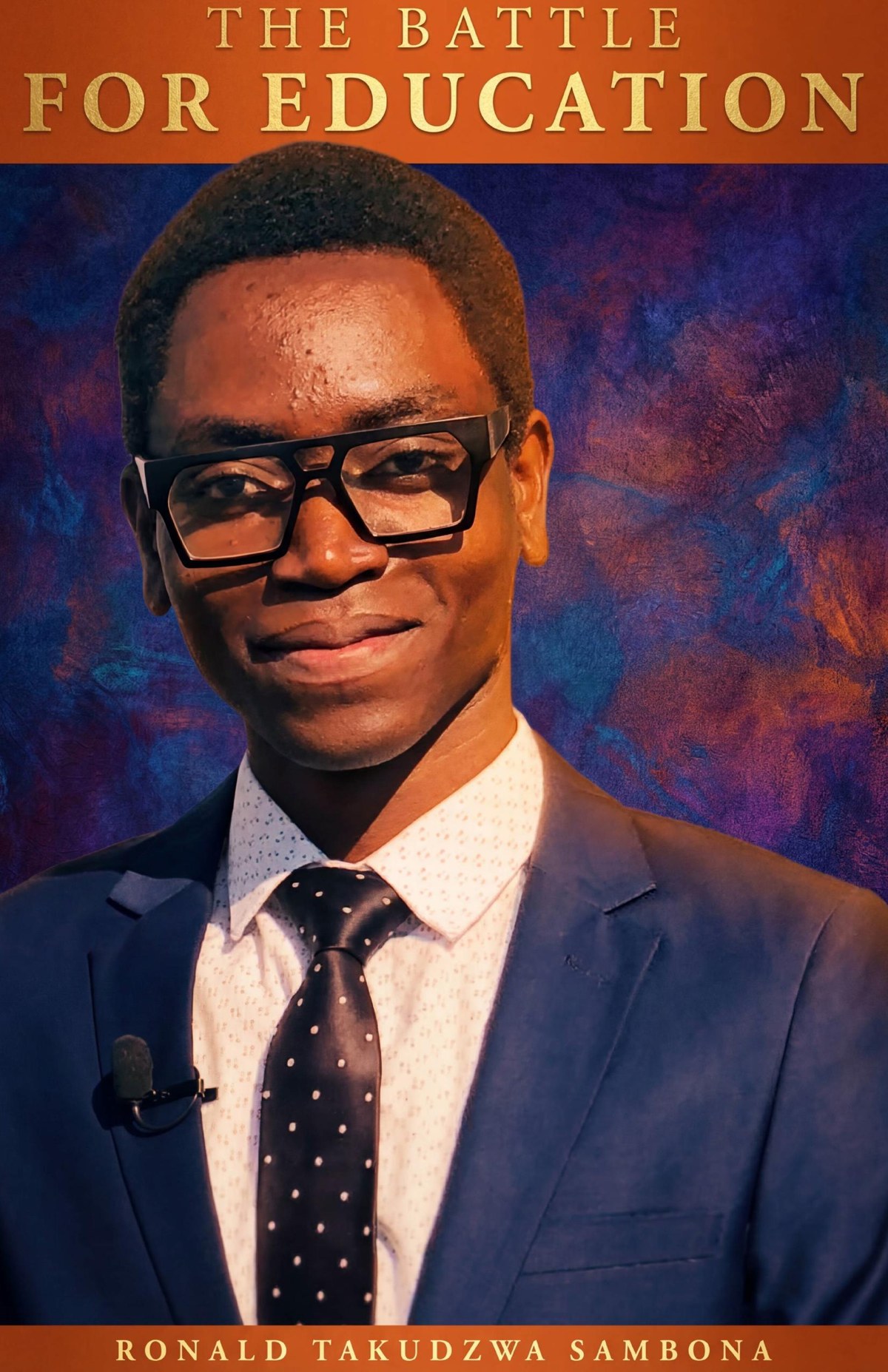

The Battle for Education
A rallying cry for Zimbabwe's future · Published by Sambona Worldwide Media
In a nation where the classroom is often a battleground, Ronald Takudzwa Sambona's debut book, The Battle for Education, arrives as both a manifesto and a lifeline. It dares readers to confront the uncomfortable truths facing Zimbabwe's education system while offering hope, vision, and a call to action.
Drawing from his personal journey — from rural Honde Valley to the heart of Zimbabwe's academic debates — Sambona explores the triumphs and heartbreaks of pursuing knowledge in a system fraught with inequality, outdated infrastructure, and cultural barriers. He does not shy away from the realities: children walking 20 kilometres to school, girls married off before finishing their studies, or teachers who persist despite impossible odds. Yet, he refuses to let despair win — urging readers to join a collective movement to reimagine education at every level of society.
Inside the book
- The case for a modern, tech-driven education system — including digital skills for rural children and girls.
- How education drives economic self-sufficiency, national vision, and cultural preservation.
- Concrete policy recommendations on digitisation, infrastructure, teacher empowerment, and social inclusion.
- A stirring call to action for parents, teachers, policymakers, and students.
More titles in development. Subscribe via the contact page for updates and early access.
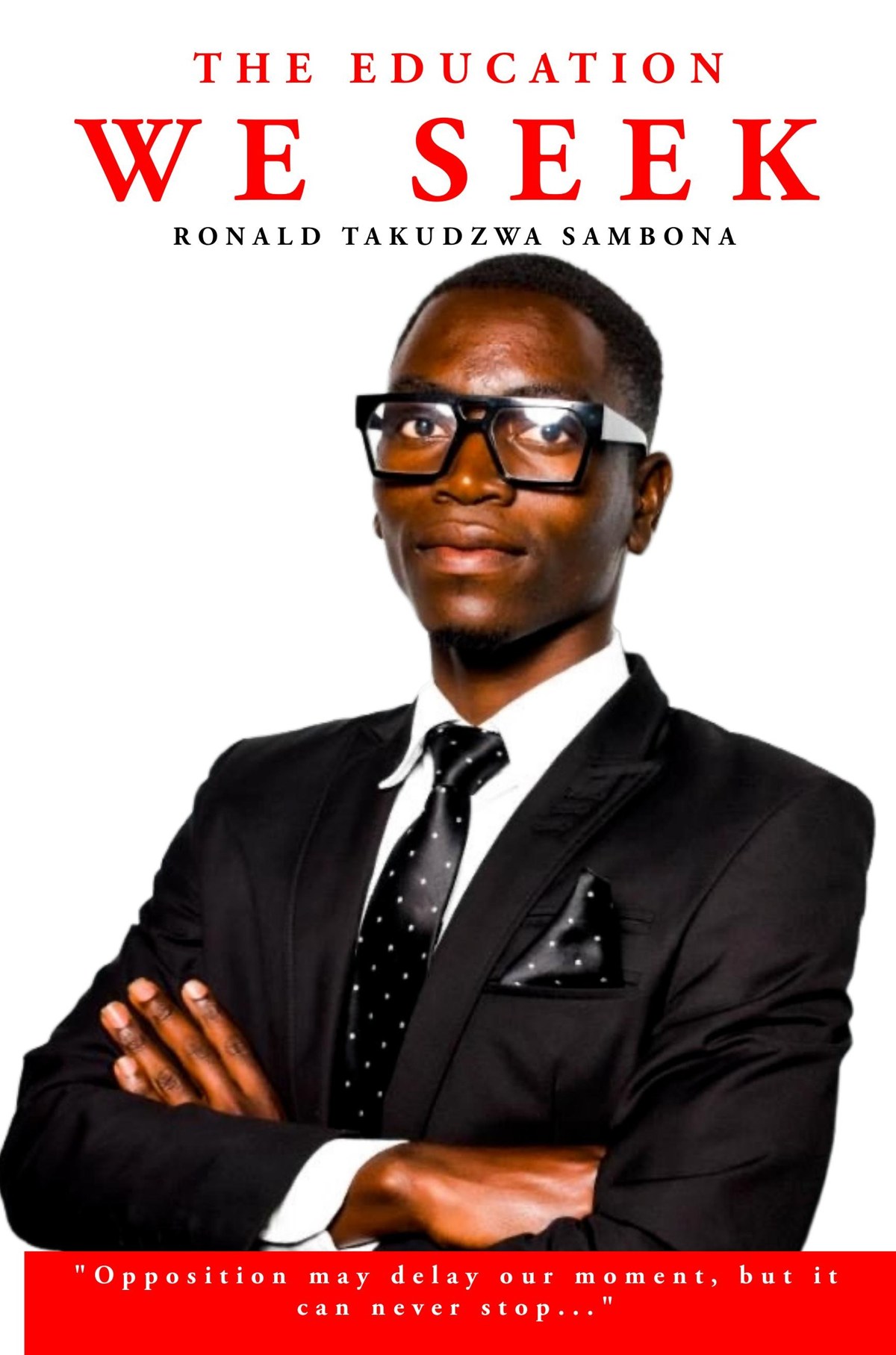
Official soft paperback cover · ISBN 978-1-77932-987-5
The Education We Seek
(25 Step Blueprint for the Future)
“I don't want my son to just pass exams. I want him to compete, to create, to lead. Ronald explains how AI, digital skills, and freedom of thought will get him there. This is THE EDUCATION WE SEEK for our children.”
The education we seek is under attack. Our children are graduating into an AI world with a chalkboard education. Our policies are written for paper, not for people. And our right to think, question and speak is being silenced in classrooms and online. This is not just a book. It is a contract.
Drawing on the Constitution of Zimbabwe, real EMIS data, and global case studies from Rwanda to Estonia, Ronald argues that we cannot fix our schools without defending three things at once:
- Academic freedom — the right to think, choose and protest (Sec 61c).
- Digital education — AI, community digital hubs, and the skills to compete globally.
- Policy with teeth — laws that are monitored, funded, and owned by the people.
With Cost of Inaction boxes, a Model Policy in Appendix B, and tools for teachers, parents and policymakers, this book gives you more than analysis. It gives you a plan. The question is not whether Africa has enough youth. The question is: will we give them an education worthy of their future?
The education we seek will not be given to us. It must be contracted, monitored, and defended.
Early access — secure your copy now
Readers can now secure bookings and early access at a reduced price of $10. Once the book launches online it will cost $15. Early readers are first in line for the launch edition and the facilitator materials.
Early access $10.00 today · $15.00 after the online launch.
The 25 Step Blueprint for the Future
Drawn from Appendix C: Further Questions and Discussion Notes in The Education We Seek, the 25 Step Blueprint is an exercise readers can use to achieve the education we seek. It helps in reimagining education, provoking tough questions and inciting meaningful discussions — in classrooms, staff rooms, homes and community halls. Each step carries the question, why it matters, and prompts for the person leading the conversation.
Academic freedom & constitutionalism
What does "academic freedom" mean to you in your school?
Why it matters: Chapter 1 argues freedom goes beyond what is taught to how educators are treated.
Facilitator prompts: Is there fear to speak? Are minimum salaries honoured? How does Sec 3 of the Constitution apply?
Academic freedom & constitutionalism
The author says "opposition may delay your moment, but it can never stop you". Give a school example.
Why it matters: Connects personal story to collective struggle.
Facilitator prompts: Saint John's High School story. When have you been delayed but not stopped?
Academic freedom & constitutionalism
Which Constitutional section is most violated in our schools today? Sec 17, 75, 80, 81, or 83?
Why it matters: Links law to daily reality.
Facilitator prompts: Use Appendix A data on pregnancy and disability dropouts.
Personal commitment & the battle for education
The author taught a class with a 100% pass rate in 2025. What made that possible?
Why it matters: Proof it can be done.
Facilitator prompts: Self-efficacy, resources, belief.
Personal commitment & the battle for education
Write your own "Battle for Education" manifesto in 3 sentences.
Why it matters: Personal ownership.
Facilitator prompts: What will YOU fight for?
Personal commitment & the battle for education
"Jesus wept, Voltaire smiled." What 2 emotions does education need today?
Why it matters: Conclusion.
Facilitator prompts: Pain + wisdom. Empathy + knowledge.
Personal commitment & the battle for education
If you could ask the Minister of Education 1 question, what would it be?
Why it matters: Civic engagement.
Facilitator prompts: Use data from Appendix A.
Personal commitment & the battle for education
"Aluta continua." What is the next battle you will fight this year?
Why it matters: Call to action.
Facilitator prompts: Personal, school and community level.
Facilitator Guide Notes
How to run the blueprint as a workshop.
- Group size
- 10–25 participants. Mix learners, teachers and parents.
- Materials needed
- Flipchart, Appendix A tables, copies of the Constitution.
- Time
- All 25 questions make a 2-day workshop. Pick 5 questions per session.
- Outcome
- Each group produces 3 action points for their school.